
Breaking
Latest tech news from South Africa and around the world•Stay updated with breaking technology developments•Innovation and digital transformation news•AI, gaming, and gadget updates daily•Crypto and fintech news from Africa•
 SA Tech News Desk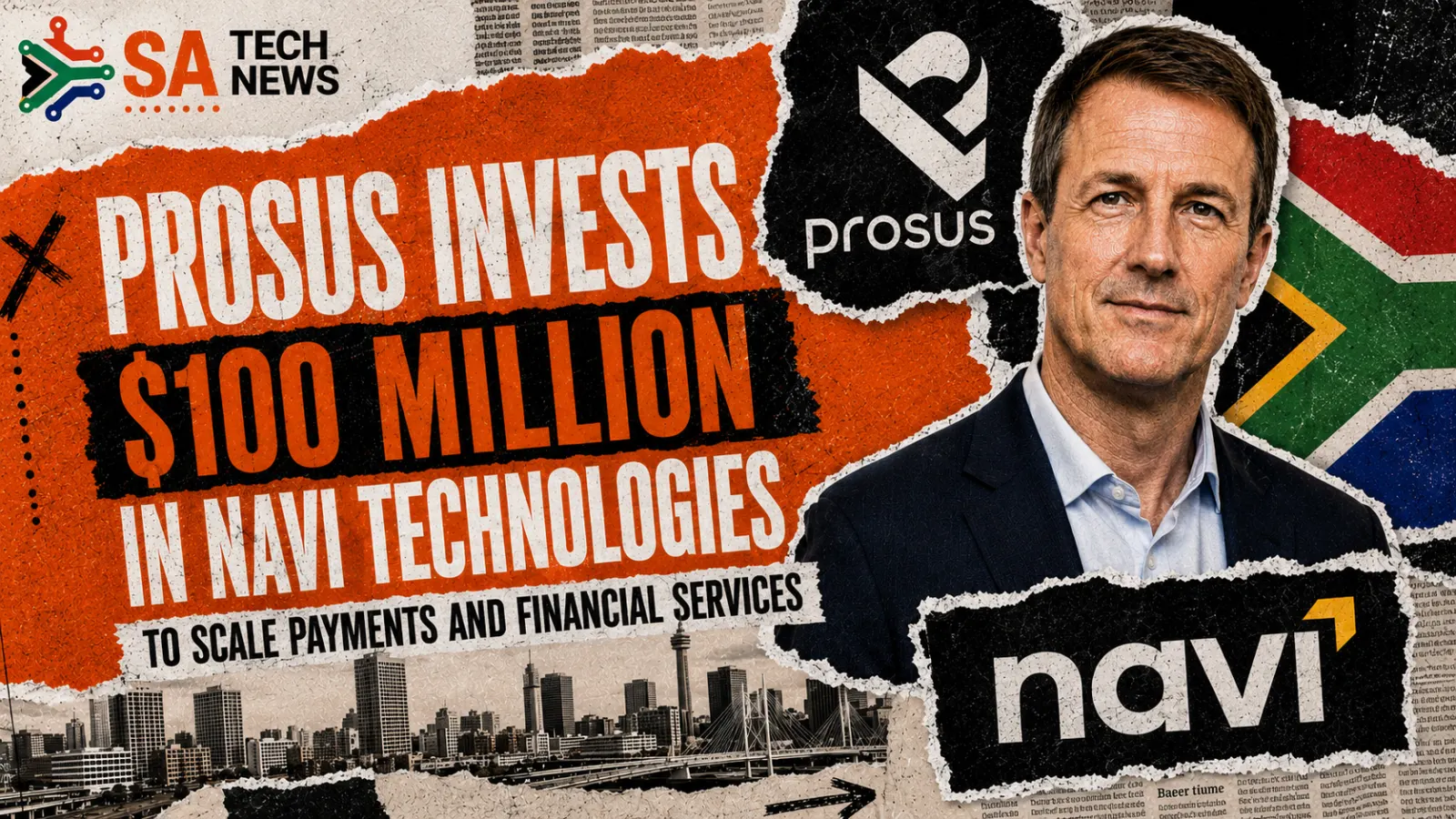
Prosus is investing US$100 million in Navi, giving the Indian fintech its first institutional capital and extending Naspers-linked bets beyond Tencent.
Prosus is putting US$100 million into Indian fintech Navi, extending the South African-linked technology group's long-running bet on India and giving Flipkart co-founder Sachin Bansal's financial-services company its first institutional capital.
The proposed investment was announced on 20 August and still needs the usual closing approvals, including clearance from the Competition Commission of India. Navi operates across digital payments, lending, insurance and mutual funds, putting it squarely inside one of the group's favourite hunting grounds: consumer technology businesses that can bundle several high-frequency services into one platform.
For South African investors, the deal is worth watching for a simple reason. The Amsterdam- and Johannesburg-listed company remains the international technology investment vehicle created from Naspers. Its capital allocation outside Tencent is one of the clearest tests of whether it can build another meaningful engine of value rather than remain defined by one extraordinary Chinese investment.
Navi was founded in 2018 by Bansal, who previously co-founded Flipkart. The business has grown into a digital financial platform spanning UPI payments, lending, mutual funds and insurance.
According to the investor, Navi's UPI product ended its 2026 financial year as India's fourth-largest UPI app, while Navi Finserv's assets under management passed ₹130 billion. The platform also reported consolidated profitability in the fourth quarter of FY26.
The US$100 million cheque is Navi's first institutional funding round. Reuters reported that the transaction comes ahead of a planned initial public offering, although the company has not publicly confirmed the IPO valuation. A source cited by Reuters said management is targeting a valuation of about US$2 billion for a future listing. The Economic Times separately reported that the transaction values Navi at around US$1.3 billion.
Those figures should therefore be treated as reported expectations rather than terms confirmed by either side.
India has been one of the most important markets in the history of Naspers and its international arm. The group backed Bansal's previous company, Flipkart, years before Walmart acquired control of the e-commerce business in 2018. Bansal explicitly referenced that history in announcing the deal, saying his relationship with Naspers and Prosus stretches back more than a decade.
The connection is useful, but this is not simply a reunion cheque. The investor has been reshaping itself around a more concentrated set of ecommerce and technology platforms, with fintech positioned as one of its core areas alongside food delivery and classifieds.
Navi fits that template unusually well. Payments can bring users into the ecosystem frequently. Lending and insurance can monetise those relationships more deeply. Investment products widen the financial footprint again. If the pieces work together, the result is a platform with more ways to earn from each customer than a single-purpose finance app.
That is the theory. India's financial technology market is also brutally competitive, heavily regulated and populated by some of the world's best-capitalised technology and financial companies. Scale on UPI does not automatically translate into attractive economics, while lending introduces a very different risk profile from payments.
The size of the investment is meaningful without being transformational for the buyer. Just two days before announcing the deal, Prosus disclosed that it had spent about €81.4 million, roughly US$94 million, buying back its own shares in a single week as part of its long-running repurchase programme.
That comparison highlights the scale at which the group now operates. It can deploy around US$100 million into a private fintech company while spending similar amounts in short bursts on its own stock.
The strategic question is whether deals such as this eventually create assets large enough to shift the composition of the portfolio. The company has spent years using the discount between its market value and the value of its underlying holdings as a reason to buy back shares. Repurchases can improve net asset value per share, but they do not create a new operating champion.
That is why the Navi deal matters beyond its headline number. Newer investments and operating businesses still have to prove that the investment machine can identify and scale category leaders.
The transaction cannot close until the required regulatory approvals are in place. If it does, Navi gains both a large new pool of capital and a shareholder with deep experience in Indian consumer internet businesses.
The buyer, meanwhile, gets another sizeable position in India's digital-finance market at a point when Navi says its economics are improving.
For JSE investors, there is no immediate change to the story. Tencent remains the asset that towers over the portfolio. But each new cheque is part of the effort to make that sentence less true over time. Navi is now one of the more interesting tests of whether that can happen.
Source: SA Tech News