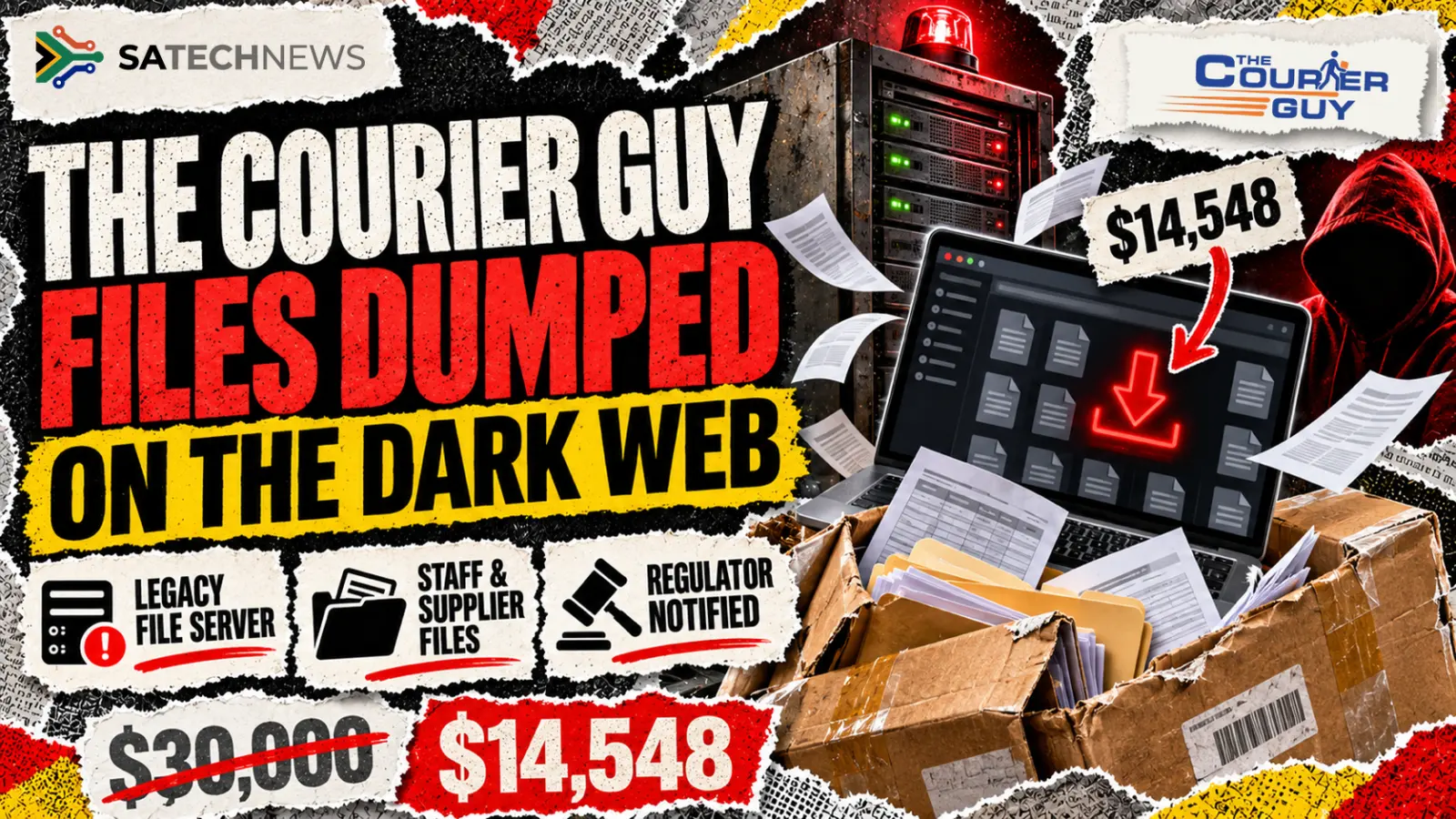
MedusaLocker dumped The Courier Guy's files on 4 November. The courier says no customer data leaked, but the listing includes staff and supplier records.
The Courier Guy has reported a data breach to the Information Regulator and the police after the MedusaLocker ransomware group republished the company on its leak site on 4 November and dumped files it says it stole.
The courier first appeared on MedusaLocker's dark web site in August. At the time it told MyBroadband it had found no evidence that its internal systems were compromised, and it had not notified the regulator. Three months later the position has changed: the company now says a single legacy file server was the likely source, and it has filed the notifications that the Protection of Personal Information Act (POPIA) requires.
For South Africans who use The Courier Guy to send or receive parcels, the company's answer is that their details were not in the files. For its staff, suppliers and landlords, the answer is less comfortable.
What was put up for sale
MedusaLocker first offered the data for $30,000, about R493,400. When it relisted the company on 4 November it cut the asking price to $14,548, roughly R239,300, and published the material. MyBroadband reported that the group may have been trying to sell the data rather than run a classic double-extortion play, in which attackers encrypt systems and threaten a leak at the same time.
According to MyBroadband's report on the leak, the material includes purchase orders to suppliers, staff recruitment and training records, leave schedules, lease renewals for shopping centre branches listed by name, security service-level agreements, vehicle finance documents, and financial information with details of partners and employees.
The FBI and the US Cybersecurity and Infrastructure Security Agency say MedusaLocker has operated as a ransomware-as-a-service group since at least 2019. It has named South African companies before: in early September, Hungry Lion, the fast-food chain, appeared on the same leak site.
What The Courier Guy says
In a written response to MyBroadband, the company said the likely source was a single legacy file server, which it isolated immediately. "No ransomware was deployed, no systems were encrypted," it said.
It described the leaked files as historical supplier and landlord-related administrative and finance records. "No customer, parcel or delivery data was involved," the company said.
The Courier Guy said it has reported the incident to the Information Regulator and the South African Police Service and notified its suppliers. It has not been contacted by the group, has not received a ransom demand, and has strengthened its security monitoring since August. It said it may notify further affected parties if its review requires it.
Why the regulator notification matters
Section 22 of POPIA requires a responsible party to notify the regulator and affected people as soon as reasonably possible after it has reasonable grounds to believe personal information was accessed by an unauthorised person. In August the company said it would follow that process if its investigation confirmed a breach. The notification now on file means the regulator can ask how long the legacy server held the data and why it was still reachable.
Supplier invoices and lease terms are commercially sensitive, but they are mostly business information. Recruitment files, training records and leave schedules are a different matter. Records of that kind identify individual people, and POPIA protects them whether the person is a customer or an employee.
What is still open
The company's description and the leak description do not fully line up. The Courier Guy calls the material supplier and landlord records; the listing described by MyBroadband includes staff recruitment, training and leave files and details of employees. The company has not said whether current or former employees have been told their information may be in the dump, how many people are affected, or how far back the records go.
The Courier Guy did not name a spokesperson in its response. Its statement that it may notify further parties is the last word so far, and the files have been public since 4 November.
Two prices, three months apart
MedusaLocker put The Courier Guy on its leak site in August and asked $30,000, about R493,400. On 4 November it listed the company again, cut the price to $14,548, roughly R239,300, and published the files. MyBroadband's reading is that the group may have been trying to sell the data, rather than running a classic double-extortion attack in which systems are encrypted and a leak is threatened at the same time. The company now says no ransomware was deployed and no systems were encrypted. It also says it has not been contacted by the group and has not received a ransom demand.
The August position and the November position are different. In August the company told MyBroadband it had found no evidence that its internal systems were compromised, and it had not notified the regulator. It now says a single legacy file server was the likely source, that the server was isolated immediately, and that it has reported the incident to the Information Regulator and the South African Police Service and notified its suppliers. It says it has strengthened its security monitoring since August, and that it may notify further affected parties if its review requires it.
What POPIA is being asked to do
Section 22 of the Protection of Personal Information Act requires a responsible party to notify the regulator and the affected people as soon as reasonably possible once it has reasonable grounds to believe personal information was accessed by an unauthorised person. In August the company said it would follow that process if an investigation confirmed a breach. The notification now on file is that step. It lets the regulator ask how long the legacy server held the data and why it was still reachable. It does not, by itself, say how many people are in the files or how far back the records go. The company has not given those figures.
The files, as MyBroadband described the leak, include purchase orders to suppliers, staff recruitment and training records, leave schedules, lease renewals for shopping centre branches listed by name, security service-level agreements, vehicle finance documents, and financial information with details of partners and employees. The company calls the same material historical supplier and landlord-related administrative and finance records, and says no customer, parcel or delivery data was involved. Those two descriptions do not fully match. Supplier invoices and lease terms are mostly business information. Recruitment files, training records and leave schedules identify people. POPIA protects that information whether the person is a customer or an employee.
The FBI and the US Cybersecurity and Infrastructure Security Agency say MedusaLocker has operated as a ransomware-as-a-service group since at least 2019. It has named South African companies before. In early September, Hungry Lion appeared on the same leak site. The Courier Guy did not name a spokesperson in its response. The files have been public since 4 November, and the company's line that it may still notify further parties is the last word so far.