Breaking
Latest tech news from South Africa and around the world•Stay updated with breaking technology developments•Innovation and digital transformation news•AI, gaming, and gadget updates daily•Crypto and fintech news from Africa•
 SA Tech News Desk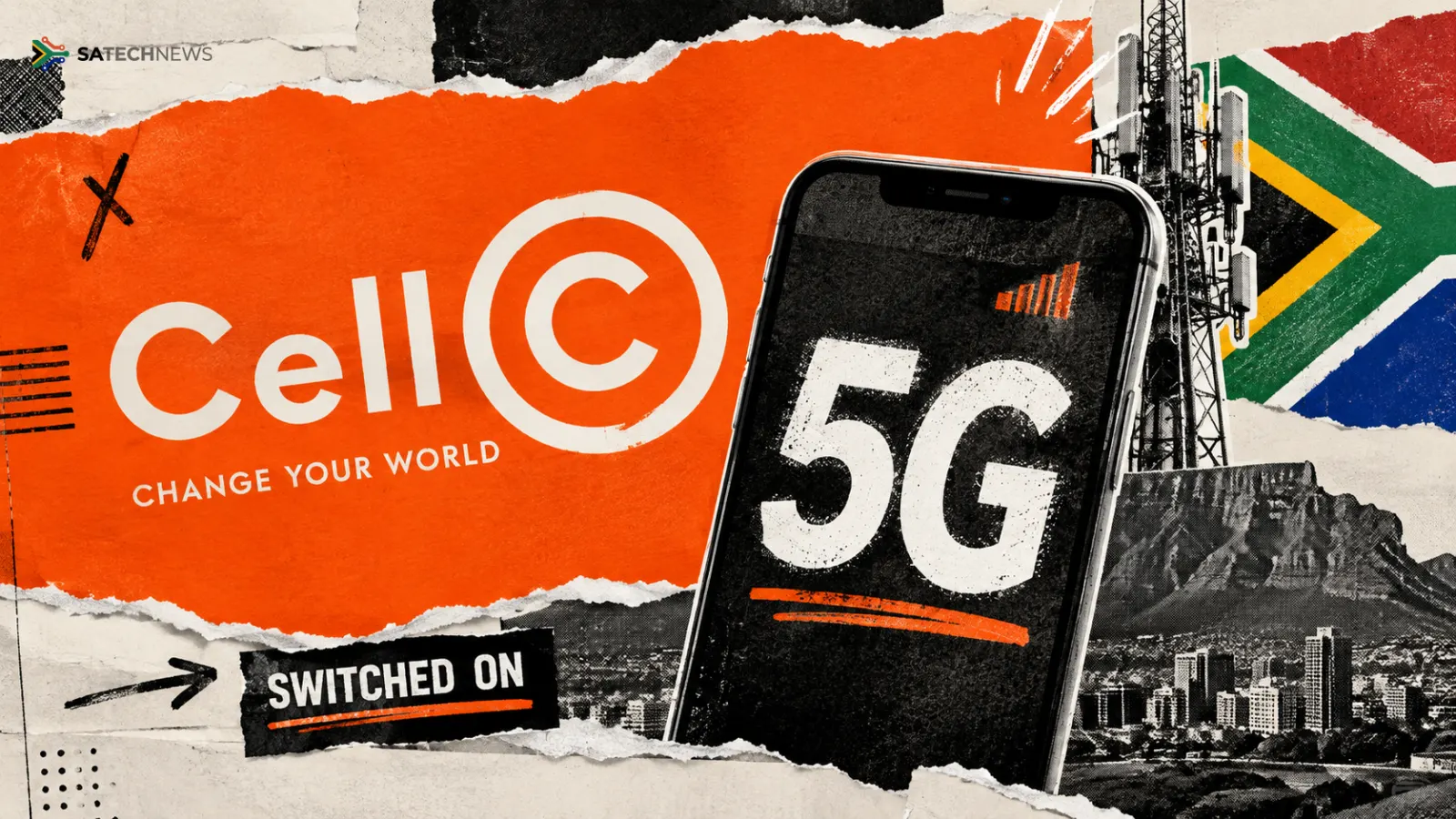
Cell C has switched on 5G without the usual launch spectacle. Its roaming-led approach shows how the operator plans to compete without rebuilding the.
Cell C has quietly switched on 5G in South Africa, giving customers with compatible devices access to the faster network without the usual launch event, campaign or barrage of "next-generation" marketing.
CEO Jorge Mendes confirmed the network is already live in an interview with TechCentral on 21 August. The unusual part is not that the operator finally has 5G. It is that management has deliberately chosen not to make much noise about it.
That decision says quite a lot about the company it is trying to become. Instead of rebuilding a nationwide radio network of its own, the operator is leaning on its asset-light model and roaming relationships with Vodacom and MTN. Customers get 5G coverage using infrastructure that already exists, while spending concentrates on the parts of the business that can still differentiate it.
The current model is very different from the network-building contest that defined South Africa's mobile market for years. Management describes the company as a capital-light operator that uses network partnerships to provide nationwide services rather than trying to match Vodacom and MTN tower for tower.
Mendes told TechCentral that customers with a 5G-capable handset in an area covered by 5G should already be able to use the service. The operator's website now says its new SIM cards are 5G-enabled and that customers need a compatible phone plus coverage to get the faster connection.
The approach is pragmatic. Building a competitive national 5G radio network from scratch would be enormously expensive, particularly for a company that has spent years repairing its balance sheet. Selling a modern mobile service while using the networks of larger rivals underneath is the cheaper path.
It also means the interesting question is no longer whether a 5G icon can appear on a customer's phone. The question is what the operator plans to do with that access.
Mendes has indicated that commercial propositions will matter more than advertising the technology. Fixed-wireless access, using mobile 5G as an alternative to a fixed broadband line, is one option under consideration.
That would make more sense than treating 5G as a trophy. For many users, a well-performing 4G connection is already fast enough for streaming, messaging and ordinary browsing. A 5G badge matters more when it enables a product that changes how someone buys connectivity, such as a home broadband service that can be installed without fibre.
The operator is also moving customers towards voice over LTE, or VoLTE, which shifts calls onto newer data network infrastructure. TechCentral reported that about one million customers have already been migrated, with roughly three million more expected to follow.
The network transition is therefore broader than one radio technology. It is part of an attempt to simplify an ageing mobile stack while presenting customers with a network experience that is less obviously different from the two market leaders.
The live 5G service was revealed on the same day annual results were presented for the 12 months to the end of May 2026. Reuters reported that full-year headline earnings rose 57.4%, helped by prepaid growth and a major reduction in debt after restructuring.
The direction was already visible in interim numbers. For the six months to November 2025, revenue increased 1.8% to R5.68 billion while service revenue reached R5.62 billion. Wholesale revenue grew 22.5%, and the platform was supporting more than five million lines from mobile virtual network operators.
Those figures matter because they explain why the 5G strategy does not look like the old model of mobile competition. Wholesale and MVNO traffic allow the company to monetise its platform without owning every layer of the physical network. A roaming-based 5G product follows the same logic.
There are trade-offs. Direct control over the underlying radio network is weaker than for an operator that owns the infrastructure end to end, and customer experience still depends heavily on the quality and economics of network agreements. But the alternative, spending billions to recreate what Vodacom and MTN have already built, would be difficult to justify.
For now, users do not need to buy a special "5G contract" simply to access the technology. The practical requirements are a supported SIM, a 5G handset and coverage in the area where the device is being used.
What is still missing is the product layer. The operator has not yet turned its new network access into the kind of distinctive offer that would give someone a reason to move networks specifically for 5G.
That is probably why the launch has been so quiet. Connectivity came first. The harder job is turning that network access into something customers will actually pay attention to.
Source: SA Tech News