MTN has resumed talks to buy Telkom, reviving a 2022 proposal. Cash and share terms remain under discussion, with competition approval far from certain.
MTN Group has reopened talks to acquire rival Telkom, reviving a proposed South African telecoms combination that fell apart in 2022. The companies are discussing a possible cash offer, with Telkom shareholders potentially able to elect MTN shares instead. No binding transaction has been announced.
For South African mobile and fibre customers, the question is whether a combination of two major networks would improve connectivity and affordability or reduce independent competition. The early-stage announcement does not answer it.
A market report on 16 November said the terms were still under negotiation. A potential transaction is not an agreed price, regulatory approval or completion timetable.
What the numbers say
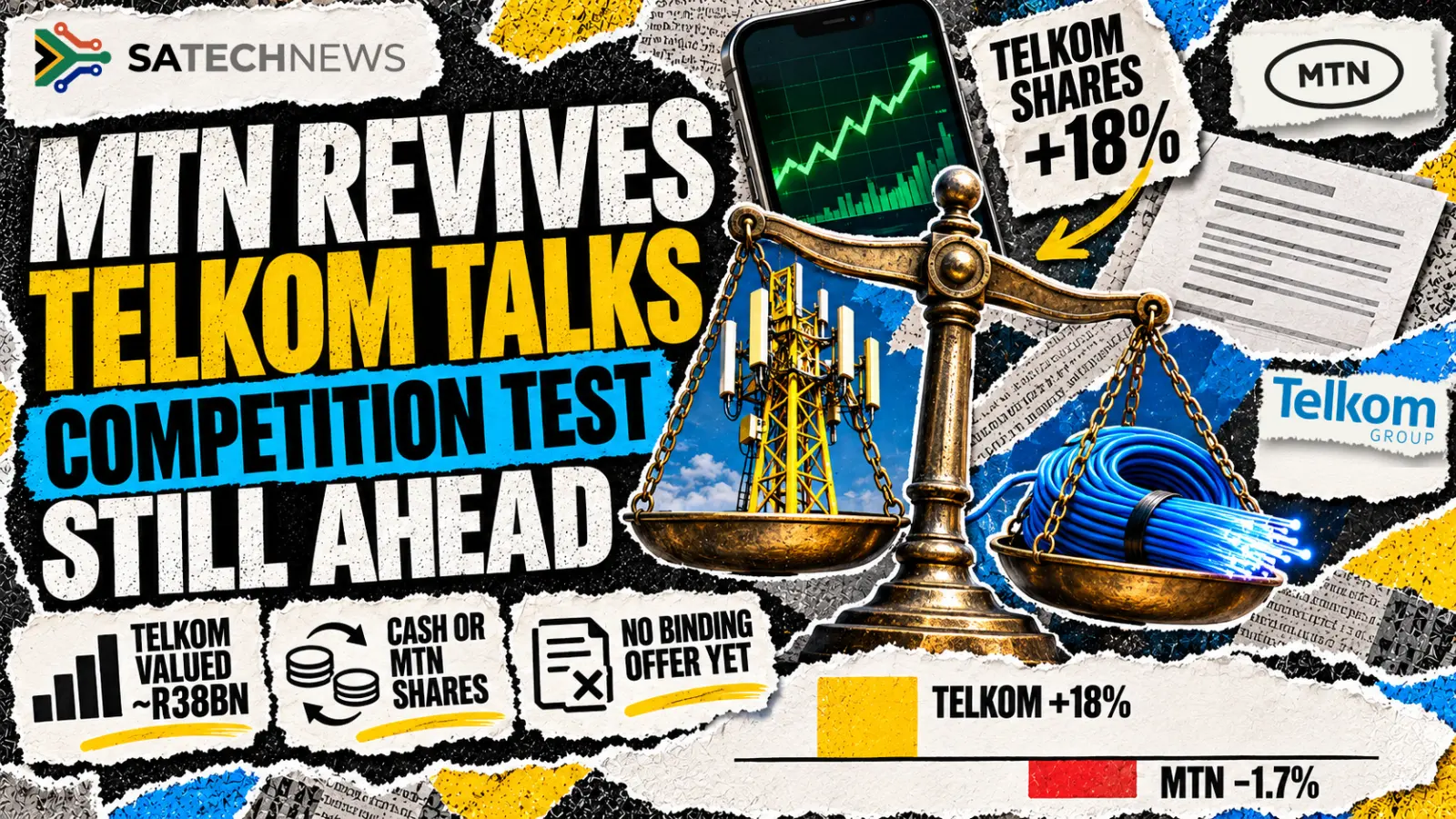
That report put Telkom's enterprise value at about R38 billion, including a market capitalisation of approximately R32 billion and net debt of R6.4 billion. MTN's market value was about R432 billion. These are market estimates, not the price of an agreed offer.
Telkom shares rose 18% to a more than seven-year high after the news, while MTN shares fell 1.7%. That reaction shows contrasting investor expectations, not proof of the deal's merits.
Telkom brings mobile subscribers, fibre infrastructure and enterprise customers. MTN has an established mobile network and a much larger regional operating footprint. Combining their assets could materially alter the competitive balance with Vodacom and smaller operators.
But mobile and fixed networks have different economics. A proposed integration would raise questions about wholesale access, overlapping spectrum holdings, capital spending and the treatment of existing contracts.
The regulatory hurdle
Any transaction of this scale would face assessment under South Africa's competition framework. The Competition Commission and, where applicable, the Competition Tribunal would examine effects on competition and public interest. ICASA licensing and spectrum implications could also require attention.
The 2022 negotiations did not produce a deal. Restarting discussions does not erase the commercial and regulatory obstacles that stopped the earlier attempt.
For customers in Johannesburg, Cape Town, Durban and smaller towns, the meaningful tests will be pricing, network quality, investment commitments and wholesale access. None has yet been settled in the public account of the talks.
Investors will watch the offer price, financing and the proposed cash-or-share election. Consumers should look for evidence that a larger combined operator would invest more and compete effectively rather than merely consolidate market share.
There is no binding offer, no final consideration and no regulatory clearance. Until those emerge, this remains a negotiation with potentially far-reaching consequences for South African telecommunications, not a completed merger.
The market reaction is not a verdict on the deal, because there is no deal yet. Telkom's 18% rise, to a more than seven-year high, and MTN's 1.7% fall are prices for a conversation. The enterprise-value figure of about R38 billion is a market estimate: roughly R32 billion of market value plus R6.4 billion of net debt. MTN's market value was put at about R432 billion. None of those numbers is an offer price.
What a combination would have to answer
Telkom brings mobile subscribers, fibre and enterprise customers. MTN brings a larger mobile network and a much wider regional business. Putting those together would change the field Vodacom and the smaller operators compete in. It would not, on the announcement, say how.
Mobile and fixed networks do not run on the same economics. Any later proposal would still have to deal with wholesale access, overlapping spectrum, capital spending and contracts that already exist. The 2022 talks reached none of that in public. They ended without a transaction. Reopening them does not remove the obstacles that stopped the last attempt.
The regulators named for a deal of this size are the Competition Commission and, where the law requires it, the Competition Tribunal, looking at competition and at public interest. ICASA's licensing and spectrum rules could be part of the same path. No filing of that kind has been announced.
What customers and shareholders still do not have
People in Johannesburg, Cape Town, Durban and smaller towns have no new price, no new coverage promise and no wholesale-access term to judge. Shareholders have no offer price, no financing plan and no final cash-or-share election. The companies have said a cash offer is being discussed and that Telkom shareholders might be able to take MTN shares instead. That is the whole of the public commercial term.
Until a binding offer, a final consideration and a regulatory clearance exist, this is a negotiation. It can matter a great deal to South African telecommunications. It is not a completed merger.
The 2022 attempt is the closest comparison the public record offers, and it ended with no transaction. The companies have not said which of those earlier obstacles are different this time. They have not published a price, a timetable or a list of assets that would move. A cash offer with a share alternative is a shape of deal, not a deal. Telkom shareholders cannot elect anything until an offer exists, and MTN has not said how it would pay for the cash portion.
Competition review, if a filing is ever made, would look at more than the two logos. Mobile customers already choose among MTN, Vodacom, Telkom and smaller brands. Fibre customers often have fewer choices on a given street. A combination that holds both a large mobile base and a fibre network would be examined for what it does to those choices, to wholesale access, and to public-interest questions the Commission is required to consider. ICASA's licensing and spectrum rules are a further gate, not a footnote, because spectrum and network licences do not transfer themselves when two boards agree to talk.
None of that review has started in public. The only figures on the table are market estimates from the day the talks were reported: Telkom up 18%, MTN down 1.7%, an enterprise value around R38 billion against MTN at about R432 billion. Prices can reverse on the next announcement. They are not a substitute for the offer document that does not yet exist.