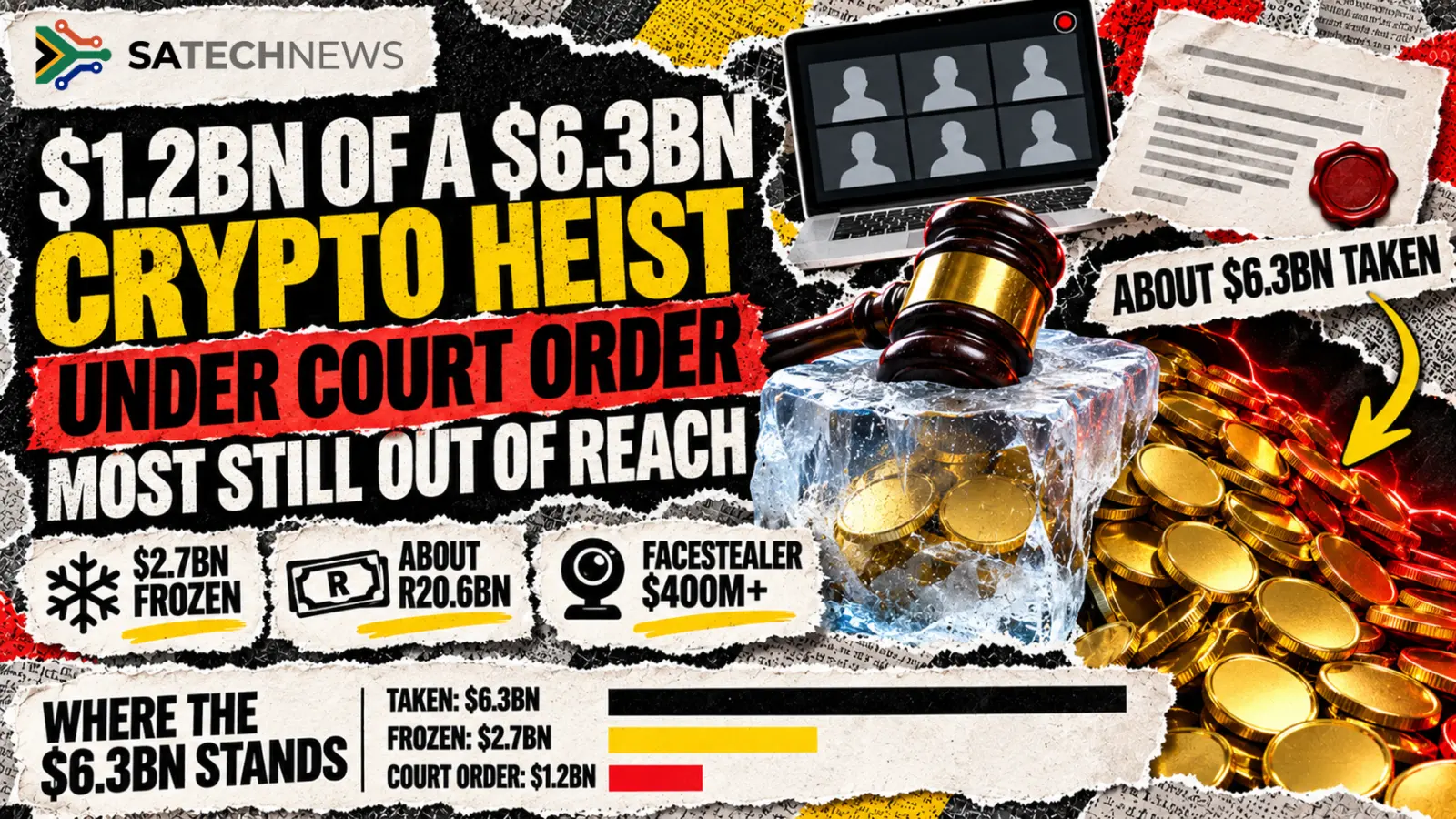
US courts have authorised the seizure of $1.2bn (R20.6bn) stolen from Binance, out of $2.7bn frozen. More than half of the $6.3bn is still missing.
United States authorities have won court approval to seize or restrain more than US$1.2bn of the cryptocurrency stolen from Binance in late October. ITWeb puts that at about R20.6bn. The Justice Department and the FBI announced the orders on Thursday 12 November, and said a wider pool of more than US$2.7bn has been frozen by investigators working with private crypto firms.
Those are the first recovery figures that come from a government and a court, and not from Binance. They also cover less than half of what was taken. About US$6.3bn was taken. With US$2.7bn frozen, more than half has moved out of reach, and only part of the frozen money is so far covered by a court order.
For South Africans who trade on Binance with rand, nothing changes in their accounts this week. The exchange restored withdrawals from 1 November and says it replaced customers' coins from its own reserves. What the announcement changes is how much of the recovery can be checked.
What was announced
Assistant attorney general A. Tysen Duva, who heads the Justice Department's criminal division, said prosecutors and their partners froze the assets "before they got beyond law enforcement reach", according to CyberScoop. Jeanine Pirro, the US attorney for the District of Columbia, said in the department's statement: "By springing into action at a moment's notice, we worked together to freeze this massive criminal fraud in its tracks."
The FBI has attributed the Binance theft to North Korean state hackers it calls TraderTraitor, the group it also blamed for the US$1.5bn Bybit theft in February 2025. North Korea has denied involvement.
A seizure order is not the end of the process. As CBS News and the Associated Press explain, the government normally files a forfeiture claim and a judge then decides who has a legitimate claim to the money. Nothing in the announcement says when, or whether, any of it returns to Binance.
The second operation: FaceStealer
The same announcement covered a separate North Korean campaign the FBI calls FaceStealer, which it says has taken more than US$400m from crypto and Web3 companies over the past 18 months. Agents seized the cloud servers behind it, along with a library of more than 900 secretly recorded webcam videos.
The method is worth knowing. Attackers take over someone's account on a messaging or collaboration platform and invite that person's contacts to a video meeting. The link leads to a look-alike Zoom or Microsoft Teams page on a misspelt domain. While the target waits for the call to start, their webcam is recorded, and that footage is later used to impersonate them to the next victim. Each compromise yields a new face and a new contact list, so the pool of targets grows "exponentially", the FBI's alert says.
Patrick Grandy, who leads the FBI's Los Angeles field office, said the scheme is "capable of deceiving even the most experienced technical and security conscious computer user".
Why it matters here
Binance markets rand deposits, rand trading and peer-to-peer services to South African residents, and when we first reported the theft its local page said it was still in the Financial Sector Conduct Authority's licensing process. Its Africa director, Larry Cooke, told ITWeb TV in an interview recorded before the hack that education and partnerships with payment providers, retailers and telecoms firms are central to its South African plans for the next two years.
Cooke also described the local scam problem in terms that match the FBI's warning. "Criminals have even used pictures of Binance staff and gone on LinkedIn and started projects," he said. His advice: "if something sounds too good to be true – it's too good to be true."
FaceStealer raises the bar on that advice. A familiar face on a video call is no longer proof of who is calling. South African exchanges, fintechs and software teams that hire and collaborate over Telegram, LinkedIn, Slack and Teams are exposed to the same approach. The practical check is to confirm a meeting link through a second channel before joining and to look closely at the web address.
What is still unresolved
Binance said earlier this month that about 98% of the stolen coins had been replaced from its reserves and other sources. That figure is still the company's own. The US numbers give an outside reference point for the first time: US$2.7bn frozen, US$1.2bn under court order, and roughly US$3.6bn unaccounted for in any official statement.
The announcement names no court date for forfeiture and no arrests. The coverage we reviewed carries no comment from Binance on whether it will claim the seized funds.
The two recovery figures do different jobs, and they should not be read as the same pile of money counted twice. The wider US$2.7bn is what the Justice Department says investigators and private crypto firms have frozen. The US$1.2bn is the smaller amount a court has allowed the government to seize or restrain. Set against the US$6.3bn taken, roughly US$3.6bn is in neither figure.
FaceStealer sits in the same announcement and is a different operation. The FBI says it has taken more than US$400m from crypto and Web3 companies over 18 months. Agents seized the cloud servers behind it and a library of more than 900 webcam recordings. The method does not start with a stolen password. It starts with a compromised contact, a meeting link on a misspelt domain, and a recording of the person waiting for the call to begin.
For South African exchanges and software teams, Cooke's warning about approaches that sound too good to be true still stands. The FBI's alert adds a harder point: a familiar face on the video call is part of the method, not proof of who is calling. The check named in the alert is to confirm the meeting link through a second channel, and to read the web address, before joining.