
Breaking
Latest tech news from South Africa and around the world•Stay updated with breaking technology developments•Innovation and digital transformation news•AI, gaming, and gadget updates daily•Crypto and fintech news from Africa•
 SA Tech News Desk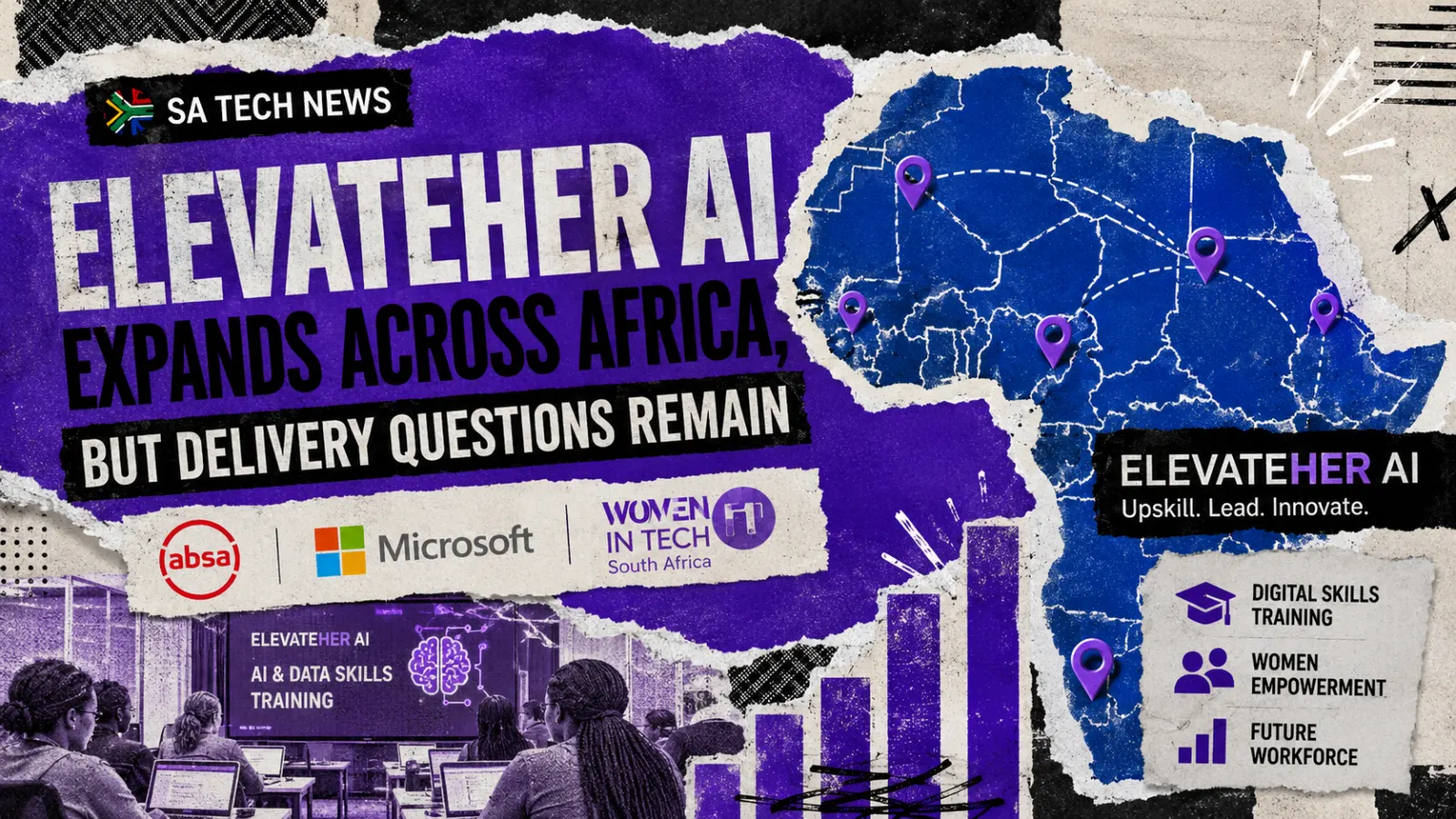
Absa, Microsoft and Women in Tech extended ElevateHer AI into nine African countries. Reach is clear. Completion and hiring outcomes are not.
Absa, Microsoft and Women in Tech have pushed their ElevateHer AI programme into nine African countries, extending a training model that promises practical exposure to artificial intelligence tools for women in early- and mid-career technology roles. The announcement leads with geography. It says less about throughput, completion, or what happens after the workshops end.
That omission matters more than the map.
The initiative is backed by Absa Group, with curriculum support from Microsoft and local delivery through Women in Tech chapters. Participants are introduced to applied AI concepts, Microsoft tooling, and project-based exercises aimed at employability rather than research depth.
That's the pitch. It is familiar.
The partners say the programme now operates across nine African markets. No breakdown is offered on how many participants each country absorbs, how many complete the course, or how many return to paid technical work using AI skills within six or twelve months. The number "nine" does a lot of work here. It is not interrogated.
Training programmes fail quietly, usually between week three and week six. This one is no exception.
Sessions are short, often compressed into evenings or weekends. Participants are expected to self-manage connectivity, compute access, and time off work. In markets with unstable power or shared devices, that friction is not theoretical. It determines who finishes.
Employer uptake is another choke point. The programme does not bind companies to internships, interviews, or placements. Skills are taught. Demand is assumed. That gap is where most attrition hides.
Microsoft's contribution is framed as platform access and learning material. That is standard. What is less clear is whether the tooling aligns with the environments participants will actually work in, particularly outside corporate or cloud-first settings.
Azure credits expire. Licences change. Support channels thin out once programmes end. None of that appears in the announcement. It never does.
Absa positions the programme as part of its broader digital skills agenda. Banks like scale because it photographs well. But scale without retention is just movement.
If Absa is serious about this being more than reputational spend, the evidence will show up later: repeat cohorts, alumni tracking, and hiring signals inside its own technology teams. For now, those signals are absent.
Women in Tech provides local reach and credibility, especially in cities where formal tech education pipelines remain narrow. That role is necessary. It is not sufficient.
Programmes like ElevateHer AI live or die on follow-through. Not expansion. Not partnerships. Follow-through.
The announcement ends there. The outcomes do not.
Publish cohort size by country, completion rates, and six-month employment outcomes. Name employers that interviewed or hired graduates. Say whether Absa's own technology teams took participants. Without those numbers, nine countries is a map, not a result.
South African readers should treat continental expansion claims the same way they treat fintech launch maps: impressive until someone shows retention. Skills programmes that skip that evidence usually return a year later with a new partner logo and the same unanswered questions.
Source: SA Tech News