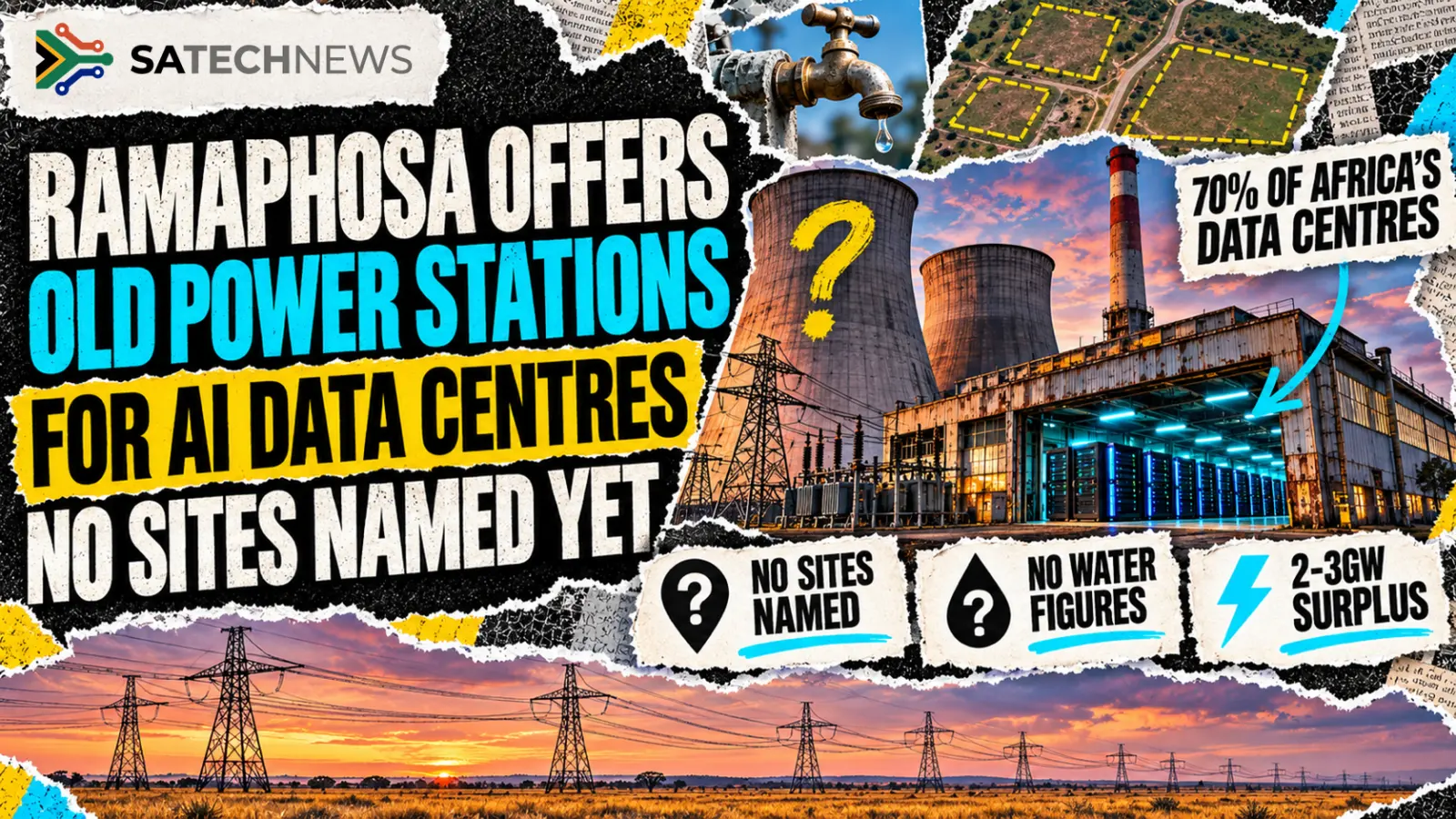
Vodacom's Egypt AI data centre will cost about $1bn. Joosub wants hubs in South Africa and Kenya next, but has named no site, partner or power supply yet.
Vodacom wants South Africa to be one of three regional hubs for AI data centres, alongside Kenya and Egypt. The Egyptian one is already under way: Vodafone Egypt, which Vodacom controls, is co-investing with Elsewedy Electric and Cassava Technologies in what Vodacom calls Egypt's largest data centre and its first "sovereign AI" facility.
Vodacom disclosed the Egyptian joint venture in Tuesday's interim results but gave no amount, stake or timeline. Group CEO Shameel Joosub filled in some of that in an interview with TechCentral: the whole project will cost about US$1bn (R16.4bn) over the next couple of years, and Vodafone Egypt will own about 30%.
For South Africa, the plan is less advanced. Joosub described the local and Kenyan hubs as "still very early" in planning. No site, size, partner or budget has been named.
Why Vodacom is building this way
Vodacom's existing data centres were not designed for hyperscalers, the large cloud and AI companies that need dense GPU halls and a lot of power. Joosub said future builds would follow the Egyptian model: secure the property first, then add capacity in modules as customers sign up. "The number is big, but it won't be $1-billion immediately," he said of Egypt.
The other reason is the balance sheet. Vodacom's net debt rose by R78.8bn to R135.6bn in the year to September, mostly because of the Safaricom deal, which took its stake in the Kenyan operator to 55%. Joosub said Vodacom is not chasing big acquisitions and wants partners to share the cost of fibre, towers and data centres in co-builds that sit off its balance sheet.
Cassava is an obvious candidate to come south. The group founded by Strive Masiyiwa said in April 2025 that it would build what it called Africa's first AI factory with Nvidia, with investment of up to US$720m across five countries: South Africa, Egypt, Nigeria, Kenya and Morocco.
The local question is power
Joosub put power first in any site decision. "Most important is to make sure you've got the power," he told TechCentral. In South Africa that comes down to grid capacity at a specific site. When Teraco went after the land next to its biggest Cape Town data centre last month, the parcel it wanted came with a substation.
Vodacom is also not alone in wanting an AI data-centre business here. MTN said in August that it is targeting 150MW of AI data-centre capacity in South Africa and Nigeria without owning the buildings itself, a similar asset-light approach.
What Egypt tells South African customers
Egypt is Vodacom's fastest-growing large market. Vodafone Egypt's service revenue rose 36.3% in local currency in the half and made up 24.8% of group service revenue. The data-centre spend comes on top of about R6.5bn of network and IT capital expenditure planned in Egypt for the 2027 financial year.
A South African hub would compete for the same corporate and government workloads that want AI computing kept inside the country. Vodacom has not said whether it would sell GPU capacity, colocation or managed AI services, or which local partner it would build with. Until it names a site and a power supply, the South African hub remains an intention.
Egypt is a project. South Africa is a sentence.
Vodacom wants South Africa to be one of three regional hubs for AI data centres, with Kenya and Egypt. The Egyptian build is under way. Vodafone Egypt, which Vodacom controls, is co-investing with Elsewedy Electric and Cassava Technologies in what Vodacom calls Egypt's largest data centre and its first "sovereign AI" facility. Tuesday's interim results disclosed the joint venture and gave no amount, stake or timeline. In a TechCentral interview, group CEO Shameel Joosub said the whole project will cost about US$1 billion, R16.4 billion, over the next couple of years, and that Vodafone Egypt will own about 30%.
He also said the number is big, but it will not be $1 billion immediately. Future builds, he said, would secure the property first and add capacity in modules as customers sign up. Vodacom's existing data centres were not designed for hyperscalers, the cloud and AI companies that need dense GPU halls and a lot of power.
South Africa and Kenya are behind that. Joosub called both hubs "still very early" in planning. No site, size, partner or budget has been named for either. A South African customer cannot yet tell whether Vodacom would sell GPU capacity, colocation or managed AI services.
Debt, Cassava, and the power question
Vodacom's net debt rose by R78.8 billion to R135.6 billion in the year to September, mostly because of the Safaricom deal, which took its stake in the Kenyan operator to 55%. Joosub said Vodacom is not chasing big acquisitions and wants partners to share the cost of fibre, towers and data centres in co-builds that sit off its balance sheet. That is why the Egyptian structure matters to the South African sentence. The local hub, if it is built the same way, would not all sit on Vodacom's books.
Cassava is the partner already in the Egyptian venture, and the group founded by Strive Masiyiwa said in April 2025 that it would build what it called Africa's first AI factory with Nvidia. The investment it named was up to US$720 million across South Africa, Egypt, Nigeria, Kenya and Morocco. That is Cassava's plan, stated last year. It is not an announcement that Cassava is Vodacom's South African partner.
Joosub put power first in any site decision: "Most important is to make sure you've got the power." In South Africa that is grid capacity at a specific site. When Teraco went after the land next to its biggest Cape Town data centre last month, the parcel it wanted came with a substation. MTN said in August that it is targeting 150MW of AI data-centre capacity in South Africa and Nigeria without owning the buildings, a similar asset-light approach.
Egypt is Vodacom's fastest-growing large market. Vodafone Egypt's service revenue rose 36.3% in local currency in the half and made up 24.8% of group service revenue. The data-centre spend sits on top of about R6.5 billion of network and IT capital expenditure planned in Egypt for the 2027 financial year. A South African hub would be competing for corporate and government workloads that want AI computing kept inside the country. Until Vodacom names a site and a power supply, that hub is an intention.