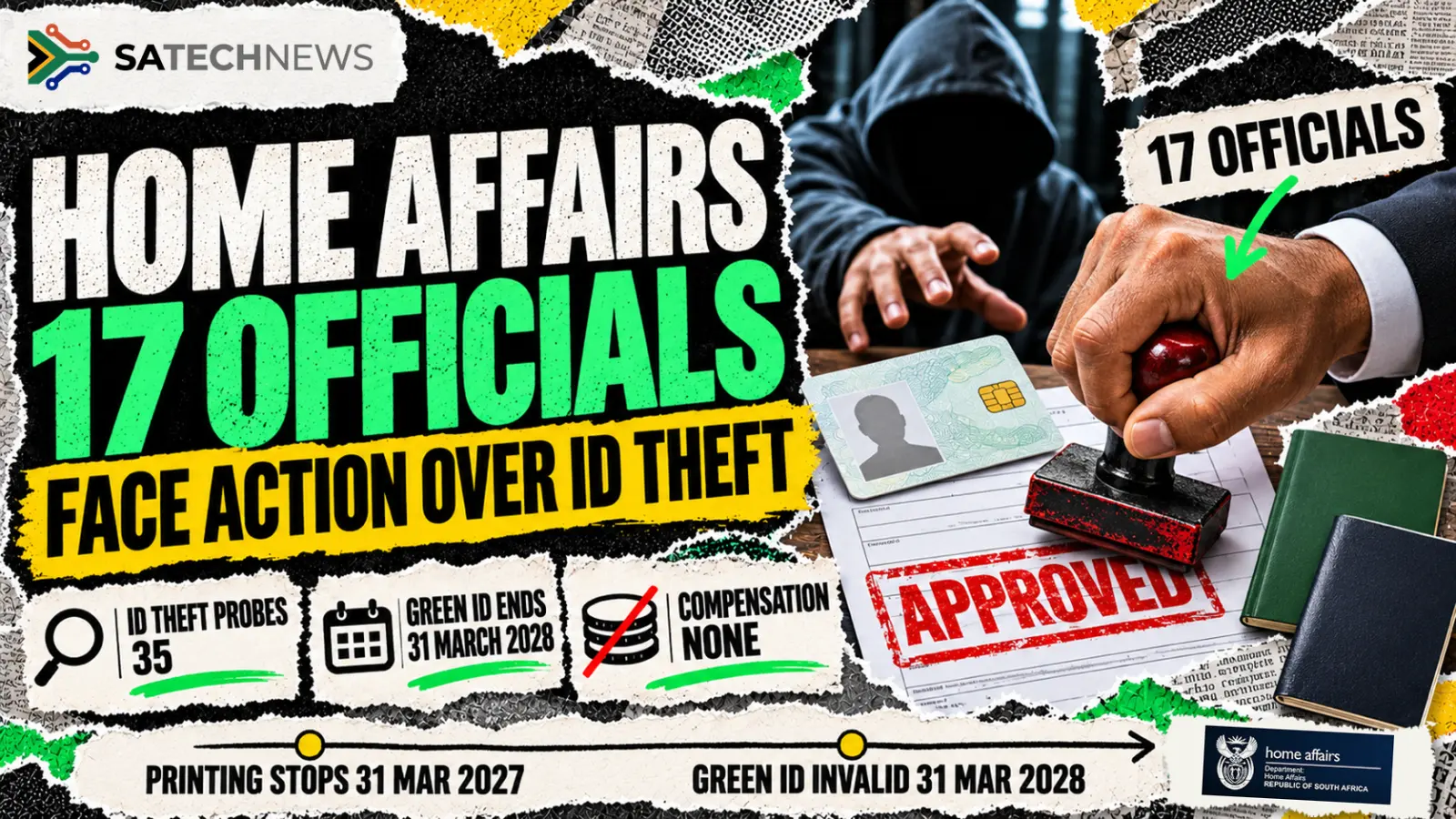
Schreiber says 17 Home Affairs officials face discipline for unlawfully processing IDs after 35 identity theft probes. Victims get no compensation.
Seventeen Home Affairs officials faced disciplinary action this year for unlawfully processing identity document applications, Home Affairs Minister Leon Schreiber told Parliament. The officials are accused of helping with identity theft, an offence under the Identification Act, and of corruption.
The figures come from a written reply to African Transformation Movement MP Vuyolwethu Zungula, reported by MyBroadband on 4 November. The reply is RNW5582. Schreiber said 35 allegations of identity theft were investigated in the past financial year. The imposters were reported to SAPS for criminal investigation, and the officials allegedly involved were referred to the department's human resources unit for disciplinary proceedings.
The 17 and the 35 are not the same count. Thirty-five is the number of identity-theft allegations investigated in the past financial year. Seventeen is the number of officials referred for discipline over unlawful processing. The reply, as reported, does not say that each of the 35 cases produced one of the 17, or that every allegation ended in a referral.
For the people whose identities were used, the reply offers little. Schreiber said victims should report the matter to SAPS, and that Home Affairs does not pay compensation to people whose identities were stolen.
Discipline first, prosecution later
The reply describes disciplinary referrals, not criminal charges against the 17 officials. That is a narrower claim than a headline which treats the 17 as already charged. Criminal cases can follow if investigators find that fraudulent IDs were issued, and corruption charges under the Prevention and Combating of Corrupt Activities Act are possible where officials took money or favours. Those cases tend to take years, as a recent KwaZulu-Natal conviction shows.
On 1 October the Durban Specialised Commercial Crimes Court found a 34-year-old former Home Affairs official guilty on 66 counts each of fraud, corruption and contravening the Immigration Act and the Identification Act, according to the Hawks. The offences ran from February 2022 to July 2023 at the Pietermaritzburg office, where a group allegedly helped foreign nationals obtain South African passports, working after hours, at weekends and on public holidays when the office was closed. He has been in custody since his arrest and returns to court on 13 November for a pre-sentencing report.
That conviction is a different case from the 17. It is a former official, already found guilty, in Pietermaritzburg, on passport offences running into 2023. The 17 are officials referred this year for discipline after the reply to Zungula. The Hawks account is useful because it shows how long a Home Affairs fraud prosecution can take: offences from 2022 and 2023, a guilty finding on 1 October 2026, sentence not yet passed. It is not a verdict on the 17.
Why the green ID book matters here
The department's own answer to identity fraud is to retire the document that is easiest to copy. In October Schreiber set 31 March 2028 as the date the green barcoded ID book stops being valid. The machines that print it will be switched off permanently on 31 March 2027, and holders will then have 12 months to move to the smart ID card. About 14.7 million citizens and permanent residents hold only the green book.
The two March dates are a year apart on purpose. Printing stops on 31 March 2027. The book stops being a valid document on 31 March 2028. The 12 months between them are the window Schreiber set for people who still hold only the green book to move to the smart ID card. The 14.7 million is the size of that group, not a count of cards already issued.
The smart ID card carries a chip and is harder to forge. It does not solve the problem in Schreiber's reply, though. A smart card issued by an official to the wrong person on the strength of a fake application is still a genuine card. That is the weakness the 17 cases point to, and it matters more as other systems come to depend on Home Affairs records: banks verify customers against the population register, and Icasa has proposed biometric checks against Home Affairs data for every SIM card.
A chip makes a forged booklet harder. It does not stop an official inside the system from creating a real record for the wrong person. That is why the reply's remedy for victims is a police report, not a Home Affairs payout, and why retiring the green book does not close the 17 cases.
What is still unclear
The reply, as reported, does not name the offices involved, say how many of the 35 investigations led to fraudulent documents being cancelled, or give a timeline for the disciplinary hearings. It also does not say whether any of the 17 officials have been suspended while their cases run. The next public marker is the 13 November pre-sentencing hearing in Durban, and that hearing belongs to the Pietermaritzburg conviction, not to the 17. RNW5582, the reply MyBroadband reported on 4 November, is Schreiber's account to Zungula. It is not a charge sheet against the 17. Victims are told to report the theft to SAPS, and the department does not pay them compensation. The Durban date is for a former official already found guilty on 66 counts each of fraud, corruption and breaches of the Immigration Act and the Identification Act. It does not put this year's 17 referrals in that dock.