
Breaking
Latest tech news from South Africa and around the world•Stay updated with breaking technology developments•Innovation and digital transformation news•AI, gaming, and gadget updates daily•Crypto and fintech news from Africa•
 SA Tech News Desk
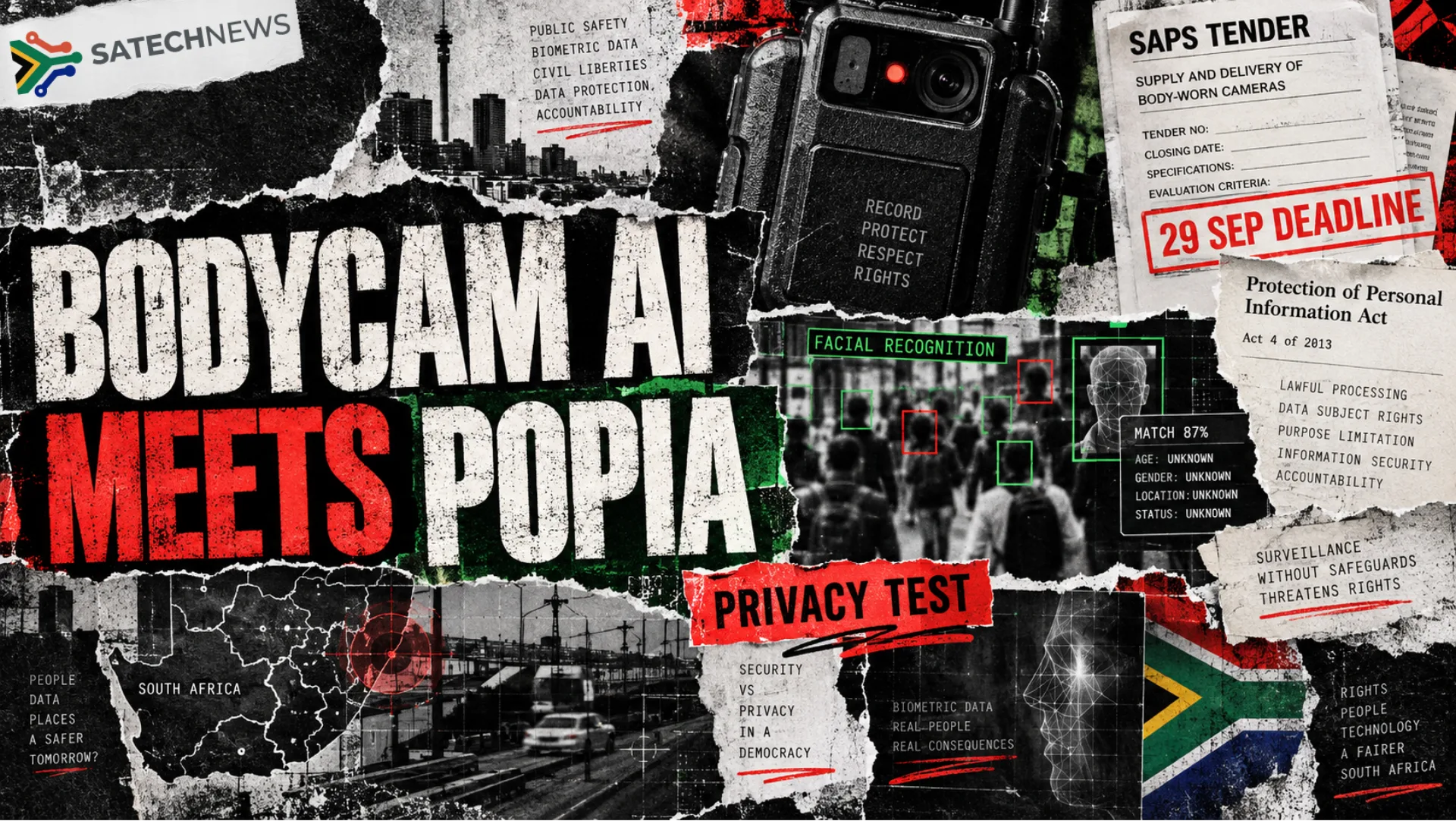
A SAPS camera tender requires facial recognition while POPIA treats biometrics as special personal information and South Africa lacks bodycam-specific rules.
A South African Police Service camera tender is asking for facial-recognition capability in body-worn and vehicle cameras while the Information Regulator says SAPS remains subject to POPIA’s restrictions on biometric information.
The procurement is being run by the State Information Technology Agency under tender RFB 3286-2026. It covers a three-year supply, support and maintenance contract for body cameras, dashboard cameras and related software. Bids close at 11:00 on 29 September 2026.
TechCentral reports that the tender requires body cameras to have the ability to conduct facial recognition and integrate with security platforms. Dashboard-camera requirements include automatic number-plate recognition, while the video-management software is expected to support analytics including motion, face and plate recognition.
That turns the procurement from a straightforward evidence-capture project into a biometric-surveillance question. Under POPIA, biometric information falls within special personal information. The Information Regulator told TechCentral that SAPS is not excluded from the act and must comply with the applicable exceptions where it processes this information.
There is another gap. South Africa does not have a dedicated statute setting out the operating rules for police body cameras: when officers must activate them, who can access recordings, how long footage should be retained or how facial matches should be handled. Those governance questions become more important once cameras move from recording events to identifying people.
The Regulator’s position is not theoretical. In a 2023 enforcement matter involving SAPS, it found that the service had failed to demonstrate adequate legislative safeguards for an exclusion it sought under POPIA after information about Krugersdorp rape survivors was circulated on WhatsApp.
The tender can still proceed through procurement, but procurement specifications do not resolve the legal basis for biometric processing. Before a national deployment, SAPS and SITA need to show how facial recognition would be limited, audited and governed under existing law. The closing date is six days away; the legal architecture remains less specific than the camera specification.
Source: SA Tech News


