
Breaking
Latest tech news from South Africa and around the world•Stay updated with breaking technology developments•Innovation and digital transformation news•AI, gaming, and gadget updates daily•Crypto and fintech news from Africa•
 SA Tech News Desk
Profile
SA Tech News DeskTim and Adam Strike founded Mission Mobile in 2023. A new R500m funding package gives their operator-focused smartphone financing model room to scale.
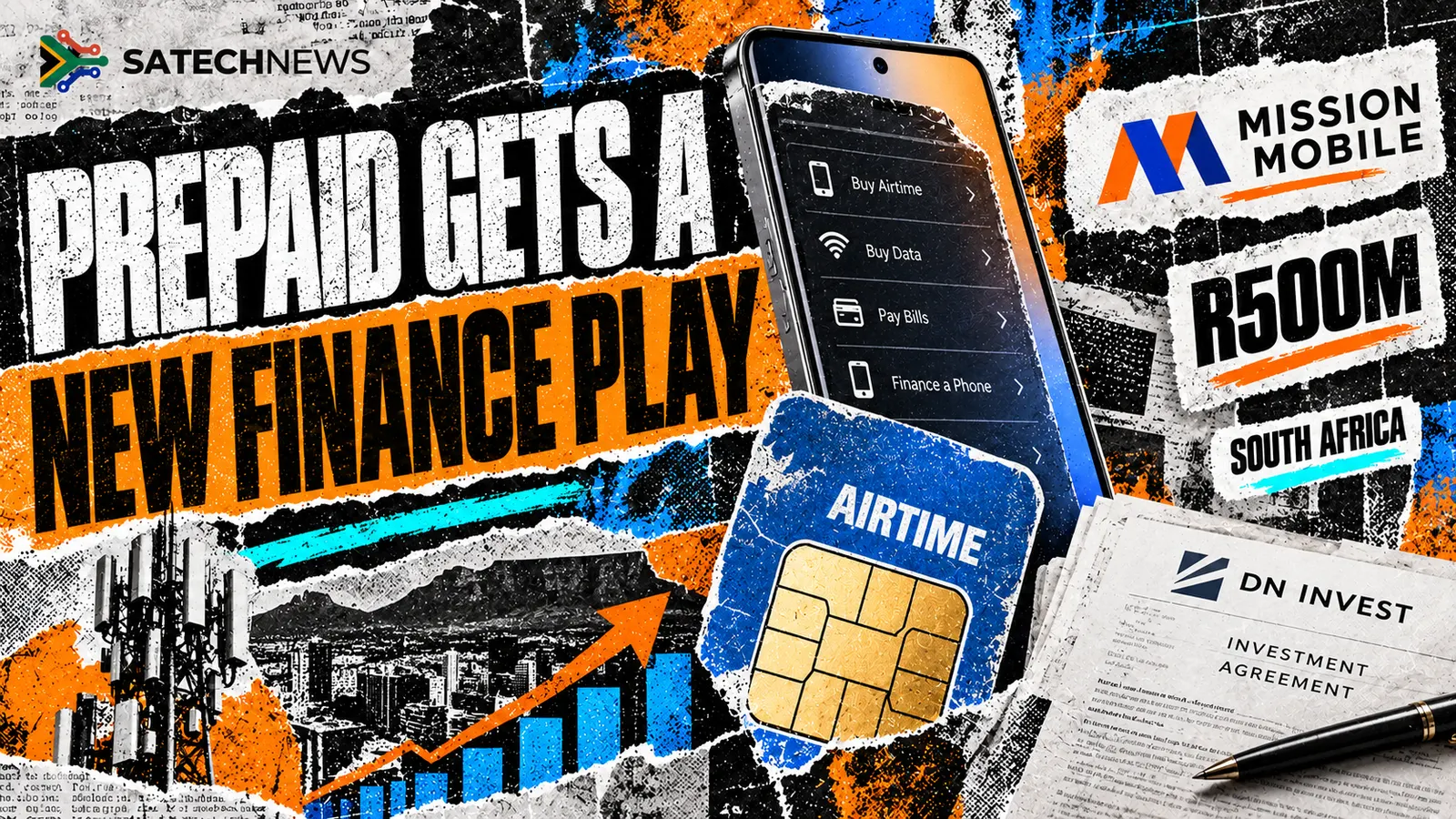
Mission Mobile has secured up to R500 million in funding from DN Invest, giving the Johannesburg startup more room to scale products aimed at mobile-network customers who are underserved by conventional postpaid and device-finance models.
The company was founded in 2023 by Johannesburg-born brothers Tim and Adam Strike. Their core thesis starts with a stubborn local fact: most South African mobile connections are still prepaid.
Tim Strike, Mission Mobile's chief executive, says more than 80% of local mobile connections remain prepaid. That creates a large customer base that operators know well but cannot always serve with traditional contract products.
South African operators have spent years trying to move customers toward longer-term relationships. The problem is affordability, credit access and income volatility. A consumer can be a reliable prepaid user for years and still fail a conventional device-finance assessment.
Mission Mobile is trying to build commercial products around that gap. The company works with mobile network operators rather than positioning itself as another consumer-facing handset brand. That model gives it access to distribution and customer relationships without needing to recreate an operator from scratch.
Vodacom, MTN, Cell C and Telkom already live this split: contract customers get device deals; prepaid customers buy a phone in cash, on a retail account, or not at all. A 4G or 5G smartphone that never reaches the prepaid majority is a network-utilisation problem as much as a social one. Operators want data usage. Old devices cap it.
The Strike brothers are betting that prepaid behaviour contains enough data to support more nuanced commercial decisions than a traditional credit score. That is not a new idea globally. What matters is execution in the South African context: irregular income, SIM switching, informal work, network loyalty and the high replacement cost of smartphones. It also has to comply with consumer-credit and privacy rules.
The funding package comes from DN Invest's own resources and ring-fenced debt facilities. Mission Mobile says it will use the capital to extend customer reach and develop additional propositions for network operators.
The amount is significant for a young South African mobile startup. It also creates pressure. Debt-backed or structured funding is useful only if the unit economics work. Device financing can grow quickly while still producing poor returns if defaults, fraud or collection costs rise.
R500 million is a facility ceiling, not money already in the bank. How much is drawn, at what cost of funds, and against which receivables will decide whether this is scale or leverage. Fintech credit in South Africa has a recent history of fast book growth followed by collection pain. Mission Mobile will be compared with that record whether it likes it or not.
NCR-regulated credit, affordability assessments and POPIA limits on how operator data can be used are not paperwork. They are the product. A model that quietly uses airtime behaviour to score a loan will attract scrutiny the moment collections get aggressive.
For operators, financing more devices can increase data usage, customer retention and service revenue. It can also reduce the friction that keeps users on older 3G or 4G devices.
Operators will not want to absorb uncontrolled credit risk. A specialist partner can be valuable if it improves approval rates without destroying repayment quality. If Mission Mobile's book sours, the operator still owns the customer complaint.
Distribution through operator channels is the prize and the dependency. A startup that lives inside MTN or Vodacom stores can scale. It can also be repriced or replaced. The R500 million only works if those relationships deepen, not if they stay at a pilot counter in a few malls.
Mission Mobile has disclosed the funding and broad expansion plan, but the next important numbers are operational. How many customers are being financed? What are repayment and default rates? How much of the R500 million will actually be deployed? Which operators will expand their relationship with the company?
Handset mix matters too. Financing grey-market models with weak warranty support creates a second default path: the phone dies, the customer stops paying. Local after-sales is part of credit risk.
The founders have identified a real structural gap in South Africa's mobile market. The next stage is proving that serving prepaid customers more aggressively can be profitable as well as inclusive — without turning a R500 million facility into a collections story.
R500 million from DN Invest buys Mission Mobile time to finance more prepaid handsets through operators. It does not buy good default rates.
The Wire Room test is repayment, fraud and how much of the facility is actually drawn — plus whether Vodacom, MTN or others deepen the partnership after the pilot glow fades. Prepaid is the real market. If the book only works on near-contract customers, the thesis was never prepaid. Operator distribution without published default rates is a black box. Ask how SIM-swap and device-unlock fraud are handled. Ask what happens when a customer misses three prepaid top-ups. Inclusive credit that cannot describe collections is just a book waiting for a cycle. R500 million is permission to scale, not proof of a working prepaid credit machine. Publish the live operator names and the arrears trend, or the Wire Room will keep treating this as a funding announcement.
Source: SA Tech News


