Breaking
Latest tech news from South Africa and around the world•Stay updated with breaking technology developments•Innovation and digital transformation news•AI, gaming, and gadget updates daily•Crypto and fintech news from Africa•
 SA Tech News Desk
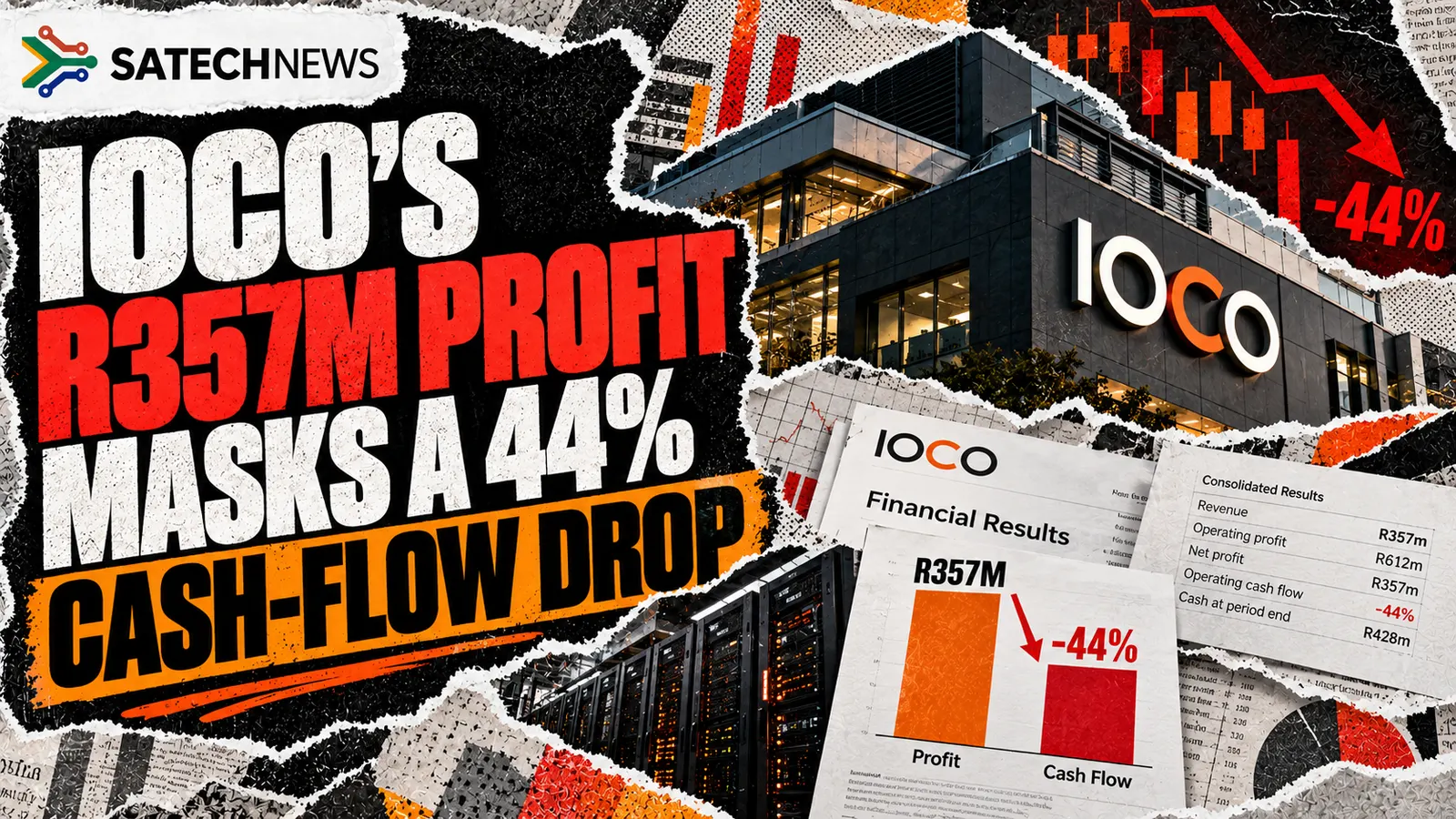
iOCO grew FY2026 profit 39% to R357m, but operating cash flow fell 44%. The numbers put its acquisition, buyback and FY2027 plans under scrutiny.
JSE-listed technology group iOCO reported R357 million in profit after tax for the year ended 31 July 2026, up 39% from R258 million. Its net cash generated from operating activities, however, fell about 44% to R239 million, according to the audited results reviewed by TechCentral. The two figures tell different stories about the former EOH Holdings' turnaround.
For South African businesses buying managed IT, networking and enterprise services, iOCO's financial health matters because long-term technology contracts depend on a supplier being able to fund delivery and support. For investors, the immediate question is how much of the earnings improvement can be converted into cash while the company resumes acquisitions and buys back shares.
The company's 13 October SENS announcement reported revenue of R5.73 billion, up about 3% from R5.58 billion, adjusted EBITDA of R624 million, up 21%, and headline earnings per share of 57 cents, against 40 cents in FY2025. The company described the year as evidence of cost discipline and better operating efficiency. The numbers support an improvement in margins; they do not show rapid top-line growth.
Adjusted EBITDA rose 21% while revenue increased by only a few percentage points. EBITDA, before adjustments, increased 18% to R610 million. Net finance costs fell 32% to R61 million from R89 million, reducing pressure below the operating line.
Those changes matter. Lower interest costs and a more efficient operating structure can lift profit even when sales are flat. iOCO's largest division, IT Services, grew revenue by 4%, according to the SENS release. The group also reported a rise in its EBITDA margin from 9% to 11%.
That improvement is not the same as proof that demand for its services is accelerating. The reported revenue increase was modest, and a recently acquired business, MySky, contributed revenue after it was consolidated from May. TechCentral reports that underlying revenue growth excluding MySky was about 2.4%, compared with the headline 2.7% figure in the audited statements.
The distinction is particularly relevant as management shifts from repairing the business to buying others. Acquisitions can add customers, capabilities and revenue, but they also consume cash and create integration work. Investors need to separate growth bought through transactions from growth produced by existing operations.
TechCentral's reading of the audited annual statements puts operating cash flow at R239 million, down from R423 million a year earlier. The prior year benefited from a large working-capital release that was not repeated, which helps explain the comparison. Even with that context, the latest cash figure is substantially below reported profit after tax.
Operating cash flow and accounting profit are not interchangeable. Revenue can be recognised before a customer pays, while movements in receivables, payables, tax and other items affect cash. A single year's conversion figure is not enough to diagnose the quality of every contract, but it is an essential check on a turnaround that now plans more capital allocation.
Management's stated priorities include share repurchases and acquisitions. iOCO completed its purchase of MySky and signed an agreement to acquire ERP specialist Astraia Technology. The group also wants a greater share of recurring revenue, which can improve visibility but still depends on billing, collection and contract margins.
In an interview published on 14 October, CEO Rhys Summerton said he does not intend to pay dividends while he leads the company, preferring buybacks and acquisitions. That is a management position, not a shareholder guarantee. It raises a capital-allocation question: are repurchases the best use of funds when operating cash flow has weakened and integration work lies ahead?
For FY2027, iOCO has guided for EBITDA of at least R680 million and recurring revenue above 60%, subject to its stated assumptions about business conditions. It also expects improving cash generation and conversion. These are forecasts, not results already achieved, and the guidance was not reviewed by the company's external auditors.
The group said its annual integrated report and meeting documents would be available by 20 October. Its annual general meeting is scheduled for 18 November 2026. Both dates provide opportunities to examine the cash-flow assumptions, debt position, buyback authority and acquisition pipeline in more detail.
The cash-flow drop is not automatically a crisis if the prior year was inflated by a one-off working-capital release. It is still a warning light when management’s preferred capital uses are buybacks and bolt-on deals. Acquisitions such as MySky and the planned Astraia Technology purchase can lift recurring revenue and capabilities, but they also pull cash into consideration, earn-outs and integration before those customers contribute cleanly to operating cash.
South African enterprise buyers should read that sequence practically. A supplier improving EBITDA margin from 9% to 11% is a positive signal on delivery discipline. A supplier whose operating cash is well below profit after tax needs to show that billing, collection and project delivery are tightening, not only that the income statement is improving. Long managed-services contracts are sensitive to that distinction: customers care whether the firm can fund engineers, licences and support through the life of the deal.
Share repurchases under a no-dividend stance concentrate the capital-allocation bet. Buybacks can support earnings per share when the share price is judged cheap relative to the turnaround. They also reduce the cash buffer available for integration surprises. Investors should therefore watch the FY2027 cash-conversion language as closely as the R680 million EBITDA floor. Guidance that “expects improving cash generation” is directionally useful and still unverified until the year produces the receipts.
Three public checkpoints sit on the calendar. The integrated report and meeting documents due by 20 October should clarify debt, working-capital movements and acquisition accounting. The 18 November AGM is where buyback authority and the acquisition pipeline can be pressed in public. Between those dates, any further SENS on Astraia closing terms or MySky contribution will show whether growth is being bought faster than cash is being collected.
Until then, the Wire Room ledger is simple: FY2026 profit after tax R357 million; operating cash about R239 million; revenue roughly R5.73 billion; adjusted EBITDA R624 million; HEPS 57 cents; MySky consolidated from May; dividend policy deferred in favour of buybacks and deals. The turnaround narrative is stronger on earnings than on cash. The next audited year has to close that gap if the acquisition strategy is to look self-funding rather than optimistic.
Figures above follow the 13 October SENS announcement and the TechCentral reading of the audited annual statements for the year ended 31 July 2026. Where a percentage is described as “about,” treat it as a rounded secondary calculation pending the integrated report tables. Management interview comments on dividends are stated preference, not a binding capital policy until confirmed in circulars and AGM resolutions.
Source: SA Tech News


