
Breaking
Latest tech news from South Africa and around the world•Stay updated with breaking technology developments•Innovation and digital transformation news•AI, gaming, and gadget updates daily•Crypto and fintech news from Africa•
 SA Tech News Desk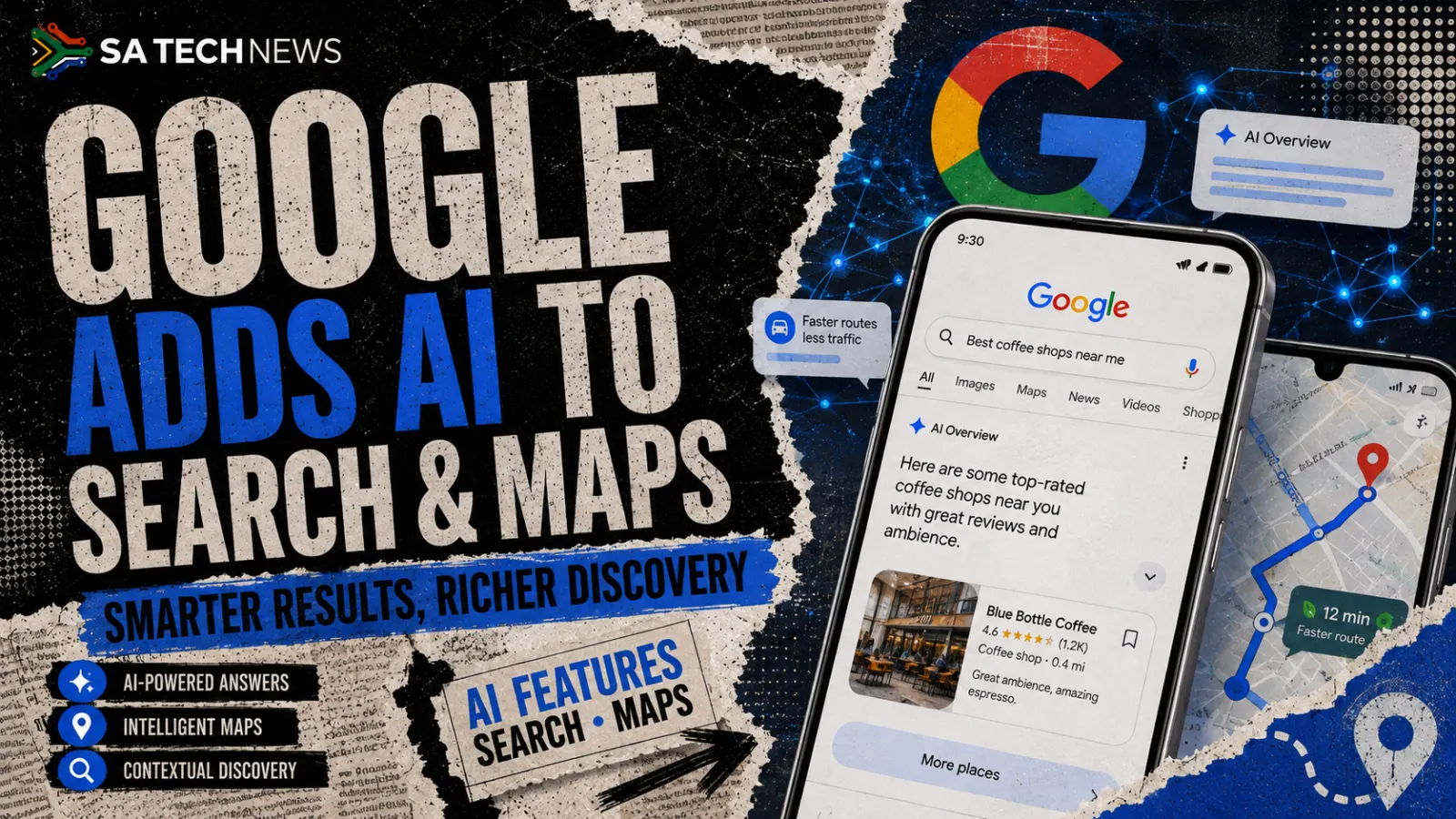
Google is pushing Gemini deeper into Search and Maps as both products become more conversational, contextual and agentic.
Google is pushing more of Gemini into two of its most widely used products, turning Search and Maps into increasingly conversational, context-aware services rather than simple lists of links and locations.
The company's recent Search updates deepen AI Mode, allowing users to ask longer, more complex questions and receive responses assembled across multiple sources. Google has also been building more agentic features into Search, with the system able to help monitor information, compare options and, in selected markets, take steps towards completing tasks for the user.
Maps is moving in the same direction. Gemini-powered features are designed to understand natural-language questions about places, routes and real-world context, while richer navigation and immersive views make the product less dependent on users knowing the exact category or destination they want before they start.
The most significant shift is structural. Google Search has spent decades training users to type a short query, scan a ranked page and choose a link. AI Mode changes that interaction by letting people ask compound questions and continue the conversation without starting again.
That gives Google more room to interpret intent, but it also changes the relationship between Search and the open web. Publishers and businesses rely heavily on Google for discovery. If an AI-generated answer resolves more of a query inside Google's own interface, fewer users may need to click through.
Google has responded by adding more visible source links and other mechanisms intended to surface publishers inside AI experiences. Whether those changes compensate for declining click-through rates remains one of the biggest unresolved questions around generative search.
Maps is a natural fit for the same approach because location questions are rarely as simple as they look. A user might want a restaurant that is open now, suitable for children, near parking and not too far from a route they are already travelling. Traditional filters can handle pieces of that request; a conversational system can combine them.
Google has also been using AI to improve visual and immersive navigation. Those changes increasingly blur the line between Search, Maps, local business discovery and Gemini itself.
For South African users, the value will depend on rollout availability and the quality of local data. Google Maps is already deeply embedded in local navigation, retail discovery and small-business visibility. Better conversational discovery could make it easier to find relevant places, but it also raises the stakes for businesses whose listings, reviews, photos and structured information are incomplete.
The broader direction is clear: Google wants AI to sit across the journey from asking a question to deciding where to go and what to do next. Search and Maps are becoming less like separate utilities and more like two views into the same Gemini-powered information layer.
Google's South African user base runs largely on Android, so Search and Maps changes land here first for mobile discovery. Local businesses that depend on Google Business Profiles and map rankings will feel ranking and AI-summary changes before most consumers notice the interface shift. For publishers, including SA tech media, the risk is the same as globally: more answers served inside Google, fewer clicks out. Watch how SA e-commerce and tourism listings perform after AI Mode expands beyond test markets.
Source: SA Tech News