
Breaking
Latest tech news from South Africa and around the world•Stay updated with breaking technology developments•Innovation and digital transformation news•AI, gaming, and gadget updates daily•Crypto and fintech news from Africa•
 SA Tech News Desk
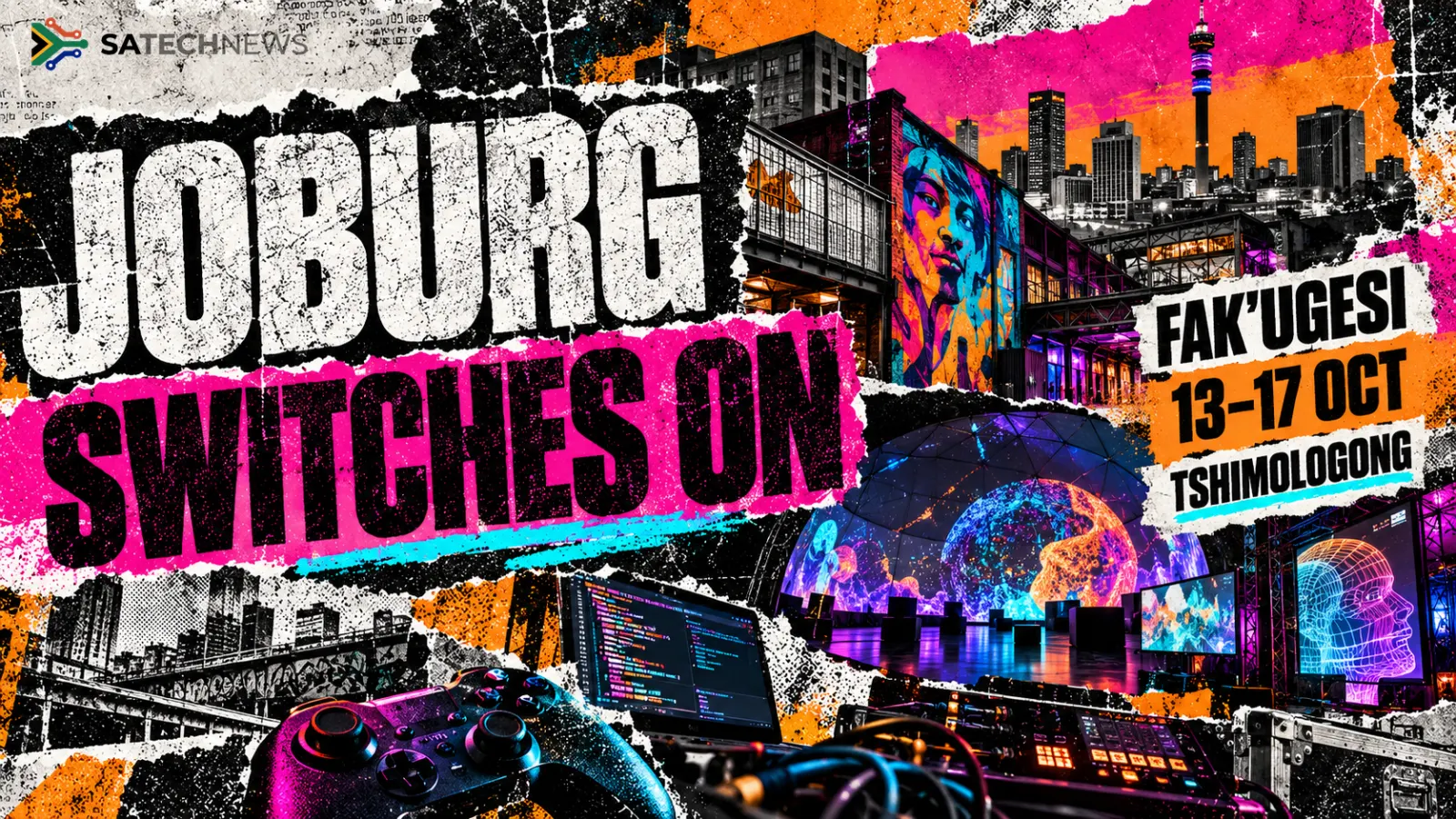
Fak’ugesi returns to Braamfontein from 13–17 October, spanning digital art, AI, immersive media and Africa’s only 8K full-dome environment.
Fak’ugesi African Digital Innovation Festival returns to Johannesburg from 13 to 17 October, bringing digital artists, coders, researchers, game makers and technologists into a programme spread across the Tshimologong Digital Innovation Precinct and partner venues.
For South African tech readers, the useful part is not the festival label. Fak’ugesi sits in a gap that conventional business-tech conferences rarely touch: the point where software, AI, games, immersive media, archives, design and African cultural production overlap.
The 2026 edition is built around the theme “African Imaginaries” and is organised into three programme strands: Memory Engines, Imagination Engines and Future Engines. The dates are close enough that this is a diary item, not a distant preview.
The festival starts next Tuesday in Braamfontein, making this a practical window for Johannesburg developers, designers, students and researchers deciding whether to attend.
Its main base is the Tshimologong Digital Innovation Precinct at Wits University. The programme also extends to venues including the Wits Anglo American Digital Dome.
The Dome is a particularly unusual piece of local technology infrastructure. Fak’ugesi describes it as Africa's only 8K full-dome immersive environment, and the festival is using it for its AfriVerse immersive programme.
That gives local creators access to a display and production format that is normally difficult to encounter outside specialist planetariums, research facilities and high-end immersive installations. For a city that talks constantly about the fourth industrial revolution, an actual 8K dome that African teams can programme is a more interesting fact than another keynote about the metaverse.
Braamfontein in mid-October is also a logistics question. Five days of sessions, installations and evening events compete with ordinary work weeks. People who want the Dome programme should treat those slots as scarce, not as drop-in extras.
The Imagination Engines strand looks at how African creatives and technologists are working with machine intelligence. The framing is useful because it moves the discussion away from another round of enterprise AI adoption claims and toward who trains, adapts and authors digital tools.
Memory Engines focuses on how communities preserve and transmit knowledge. Future Engines moves toward cities, systems and practical technology responses to African conditions.
That mix means Fak’ugesi is not easily filed under a single technology category. Games, animation, digital art, archives, urban technology and AI can sit in the same programme because the common question is how digital systems are made and used from an African context.
Joburg already has enough SaaS pitches. What it does not always have is a room where a game engine, an archive digitisation workflow and a municipal-data prototype are treated as related craft rather than separate industries. Fak’ugesi's value is that collision, if the programme stays specific enough to avoid becoming a slogan about “African futures”.
Tshimologong's location in Braamfontein matters. Johannesburg already has universities, studios, developers, startup infrastructure and creative industries within a relatively tight geography, but those groups often operate in separate professional circles.
Fak’ugesi's strongest function is as connective tissue between them. A game developer can encounter an archivist; an animator can see immersive-display work; a researcher can meet a creative technologist working outside a conventional lab.
The festival says its primary audience is 18 to 35, although the programme is open more broadly. Ticketed and open-access elements vary across the five days. Students from Wits, UJ and neighbouring colleges can walk to much of it. That walkable density is the actual comparative advantage, not a brand campaign.
Cape Town and Durban have their own digital scenes. Fak’ugesi is a Joburg instrument: inner-city precinct, university-adjacent, and close to the commercial creative industries that still cluster around the city's core. If the work only circulates among people who already attend Tshimologong events, the five days will look busy and change little.
Watch whether AfriVerse pieces are finished works or tech demos. Watch whether Memory Engines projects name collections, communities and rights, or stay at the level of “heritage plus blockchain”. Watch who is on stage besides the usual festival circuit.
Also watch the unglamorous bits: Wi-Fi that holds, access for disabled visitors, and whether township and campus groups outside Braamfontein can actually get in after hours. A digital-culture festival that is physically exclusive is just another inner-city invite.
A festival can create useful collisions without automatically producing durable projects, companies or research partnerships. The measure of Fak’ugesi is what survives after the venues empty.
For this year's edition, the most interesting test is whether the “African Imaginaries” framing produces work that is technically and culturally specific enough to travel beyond festival week, rather than becoming another broad conversation about Africa's digital future.
The Wire Room test after 17 October is simpler: which collaborations still have a shared repo, a next residency, or a Dome piece in production — and which ones ended as a panel recording.
If you go, pick one strand and one venue rather than trying to cover five days. The Dome slots and the Tshimologong corridor will tell you more than the theme copy. Book leave for midweek if you actually want the collisions; Friday night drop-ins are how people consume the brand and miss the work. African Imaginaries will be judged on whether any piece names a dataset, a township archive, a city system or a production pipeline that did not exist on 12 October. Theme language is free. Specific work is not.
Source: SA Tech News


